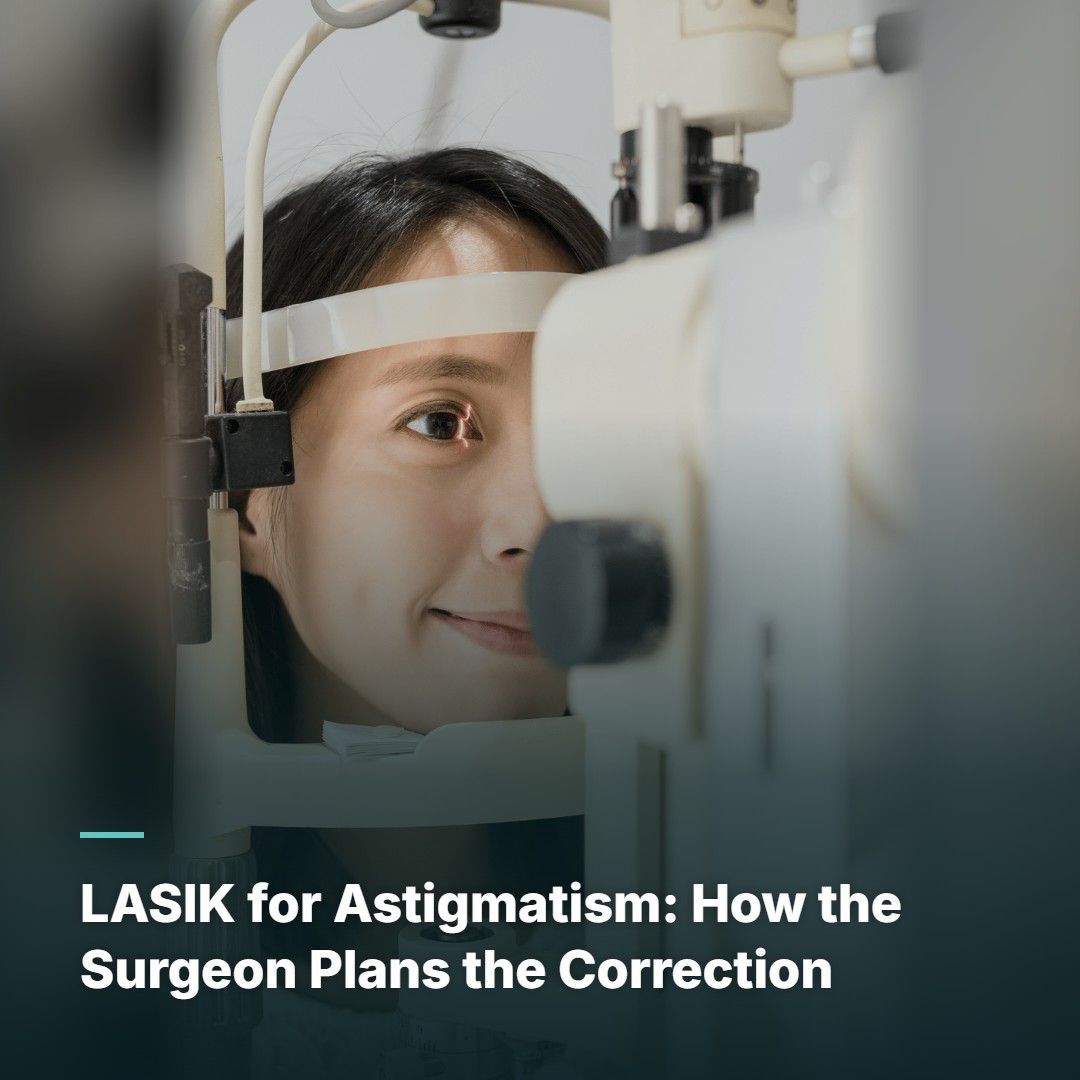
Why Does One Eye Sometimes Clear Faster Than the Other After SMILE?

It is common to notice that one eye feels clearer than the other in the days after SMILE. Both eyes had the same procedure on the same day, so why do they heal differently? The answer usually lies in small differences between the eyes themselves, and most of the gap closes with time.
At a glance
- Each eye heals at its own pace.
- Different prescriptions mean different amounts of tissue removed.
- Most differences even out within weeks.
01 Two eyes, two starting points
Many people have a slightly different prescription in each eye. A stronger correction means a thicker lenticule, which can lead to a little more early swelling and haze in that eye. Corneal thickness, shape and even tear quality also differ between eyes. These variations mean each eye starts its recovery from a slightly different place, so it is natural for them to progress at slightly different speeds. Your surgeon will take these differences into account when judging the result.
02 Small differences during surgery
Even with the same surgeon and laser, no two procedures are identical. The ease of separating the lenticule, the time each eye was docked, and minor variations at the interface can all affect early clarity. These differences are usually small and resolve as healing continues. Your surgeon notes any details that might influence recovery and checks each eye separately at follow-up. Asking about any notes from your surgery can be reassuring.
03 Uneven dryness
Tear film quality can vary between eyes, and one eye may dry out more than the other. This can happen if you sleep facing a fan or air vent, or if one eyelid closes slightly less completely at night. A drier surface blurs vision intermittently, making that eye seem slower to recover even when the cornea underneath is healing perfectly well. Lubricating both eyes regularly helps even things out. A small humidifier near the bed can also help.
04 The dominant eye effect
Most people have a dominant eye that the brain relies on slightly more for detail and depth. Small changes in that eye are more noticeable, so a minor difference can feel much bigger than it really is. Comparing the eyes one at a time, in good light and after blinking, gives a fairer impression than judging while both are open in dim conditions. Knowing which eye is dominant can make the experience less confusing.
05 Why first impressions can mislead
Clarity in the first few days can change from hour to hour. Judging the outcome too early often causes unnecessary worry. Many surgeons prefer to assess each eye's result after several weeks, once swelling and dryness have settled. An eye that feels behind on day two is often indistinguishable from its partner by the one-month visit. Patience in the first fortnight usually pays off.
06 How follow-ups track each eye
At each visit, vision and refraction are measured separately for each eye, and the corneas are examined under the microscope. This shows whether a slower eye is simply behind schedule or whether something, such as inflammation or a surface issue, needs specific attention. Bring notes of what you have noticed, including times of day when differences seem greatest. These comparisons guide whether any extra treatment is needed.
07 Helping both eyes recover
Use lubricating drops in both eyes as advised, keep up with all prescribed drops, take regular screen breaks and avoid rubbing your eyes. Wear protective shields at night if they were provided. Good sleep, hydration and avoiding smoky or dusty environments also support a comfortable recovery. Treating both eyes with the same care gives the slower eye the best chance to catch up. Consistency matters more than any single step.
08 When to ask for an earlier check
Contact your clinic if one eye becomes painful, red or increasingly light-sensitive, if its vision drops suddenly, or if the difference between the eyes grows rather than shrinks. These signs are not typical of normal uneven healing and should be examined promptly. It is always better to be checked and reassured than to wait and worry. Your clinic would much rather see you early than late.
The bottom line
Uneven early recovery after SMILE is common and usually temporary. Give your eyes time, keep up with drops and follow-ups, and report any eye that is getting worse rather than better.
This article is for general information only and does not replace an examination or personal advice from a qualified ophthalmologist.