What Is Bladeless LASIK, and Which Lasers Are Used?
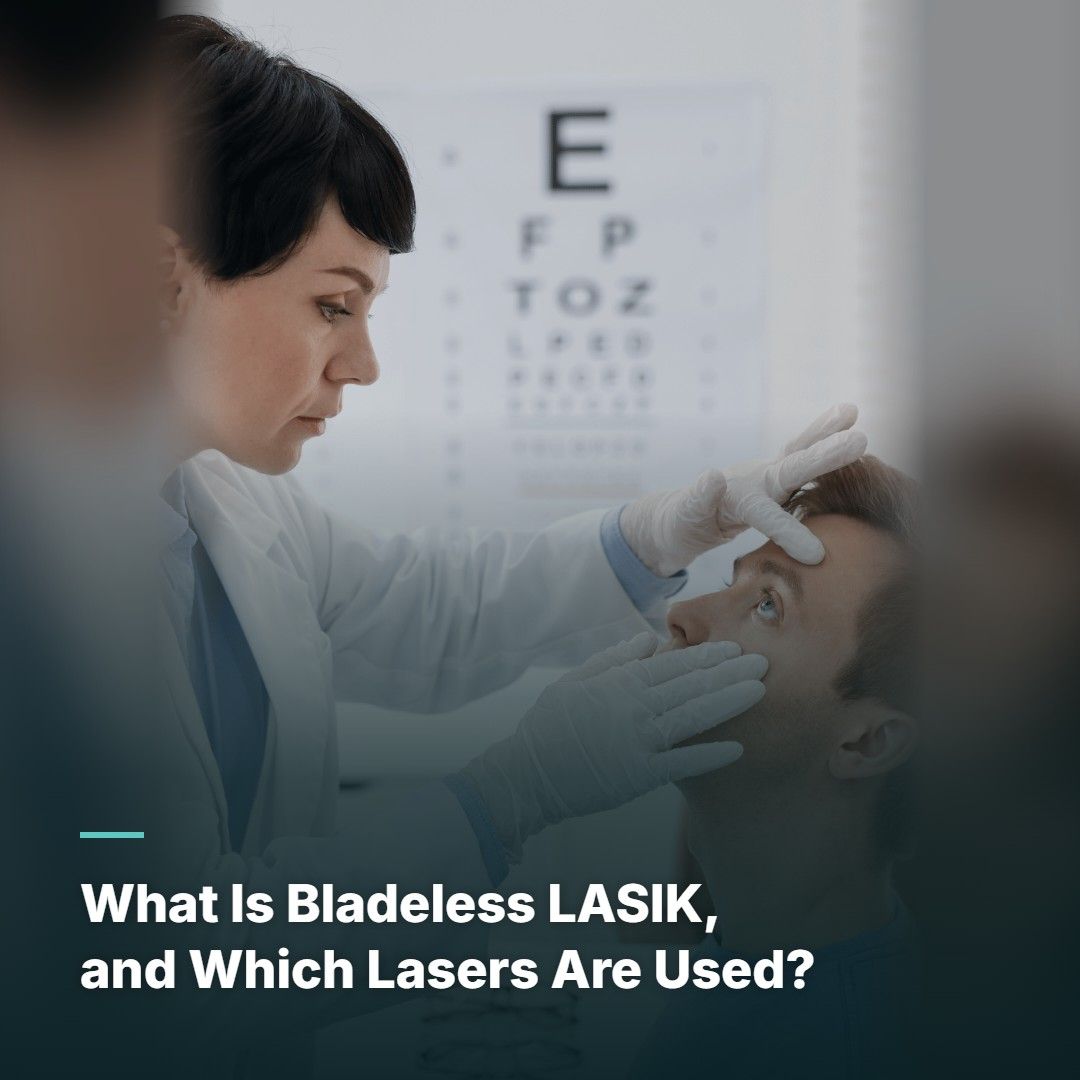
Bladeless LASIK, also called femto LASIK or all-laser LASIK, refers to creating the corneal flap with a femtosecond laser instead of a mechanical blade. The reshaping step that follows is still performed with an excimer laser. Understanding the two lasers involved helps you make sense of clinic brochures and quotes.
At a glance
- Bladeless refers only to the flap-making step.
- Two lasers are involved: femtosecond and excimer.
- Planning and surgeon experience still matter most.
01 Where the term comes from
Early LASIK used a microkeratome, a precision instrument with an oscillating blade, to cut the corneal flap. When femtosecond lasers became available for flap creation, clinics began calling laser-made flaps bladeless to distinguish them. The correction itself, however, has always been performed by an excimer laser. So when you see bladeless LASIK advertised, it describes how the flap is made, not a different way of correcting your vision. Knowing this distinction helps you compare offers more accurately. Some clinics also offer mechanical flaps at a lower price, so it helps to know the difference.
02 How a femtosecond flap is made
The femtosecond laser places tiny pulses of light at a precise depth in the cornea, separating tissue in a smooth plane. A second series of pulses creates the edge of the flap, leaving a hinge. The surgeon then gently lifts the flap along this plane. The eye is held steady by a suction interface during this step, which is when most patients notice pressure and a brief dimming of vision. The suction is released as soon as the flap is created. The whole flap step usually takes well under a minute per eye.
03 Control over flap design
Femtosecond lasers allow surgeons to choose flap thickness, diameter, hinge position and edge angle with great precision. Flaps tend to be more consistent in thickness than blade-made flaps, which helps when planning how much tissue the excimer laser can safely remove underneath. A well-designed flap also tends to sit neatly when replaced, supporting a smooth surface and good vision. Your surgeon can tell you the planned flap thickness for your eyes. Consistent flaps also make any future enhancement more predictable.
04 Common femtosecond platforms
Several femtosecond lasers are used for LASIK flaps worldwide, from manufacturers such as ZEISS, Johnson & Johnson Vision, Alcon and Ziemer. Each has its own docking interface, pulse characteristics and workflow, but all aim to produce smooth, predictable flaps. The specific model matters less than how well the clinic knows and maintains it. Ask how the clinic services and calibrates its lasers. Experience with a platform often matters more than how new it is.
05 The excimer laser that corrects vision
After the flap is lifted, an excimer laser reshapes the cornea. Widely used platforms come from manufacturers including Alcon, ZEISS, Schwind and Johnson & Johnson Vision. They differ in treatment profiles, eye-tracking systems and options for wavefront- or topography-guided customisation. Asking which excimer laser will be used is just as important as asking about the flap laser. Customised options may add cost, so ask whether they benefit you. Many clinics combine lasers from the same manufacturer, but mixing is also common.
06 Is bladeless safer?
Femtosecond flaps reduce some complications associated with older blades, such as irregular or incomplete cuts. They have their own possible effects, such as temporary light sensitivity or small gas bubbles during flap creation, which are usually managed easily. Overall safety depends more on careful candidate selection, accurate measurements and surgical experience than on any single device. Your surgeon should explain both the benefits and the possible side effects. Being told about both sides is a sign of a transparent clinic.
07 Bladeless LASIK versus SMILE
Both bladeless LASIK and SMILE use a femtosecond laser, but in different ways. LASIK uses it to make a flap before excimer reshaping; SMILE uses it to create a lenticule that is removed through a small incision without a flap. Corneal measurements, dry eye, sports and personal preferences help decide which approach suits you. A surgeon who offers both can compare them fairly for your eyes. Neither is universally better; the right match is personal.
08 Questions to ask the clinic
Ask which femtosecond and excimer lasers will be used, why that combination suits your eyes, how thick your flap will be and how eye movement is tracked during treatment. Also ask how long the surgeon has used these platforms. Clear, specific answers are a good sign of a well-organised practice that understands its equipment. Write your questions down beforehand so nothing is forgotten. A good clinic welcomes these questions.
The bottom line
Bladeless LASIK uses a femtosecond laser to make the flap and an excimer laser to correct your vision. The technology is well established; what matters most is that it is matched to your eyes and used by an experienced team.
This article is for general information only and does not replace an examination or personal advice from a qualified ophthalmologist.