Can You Have SMILE Pro With a Low Prescription?
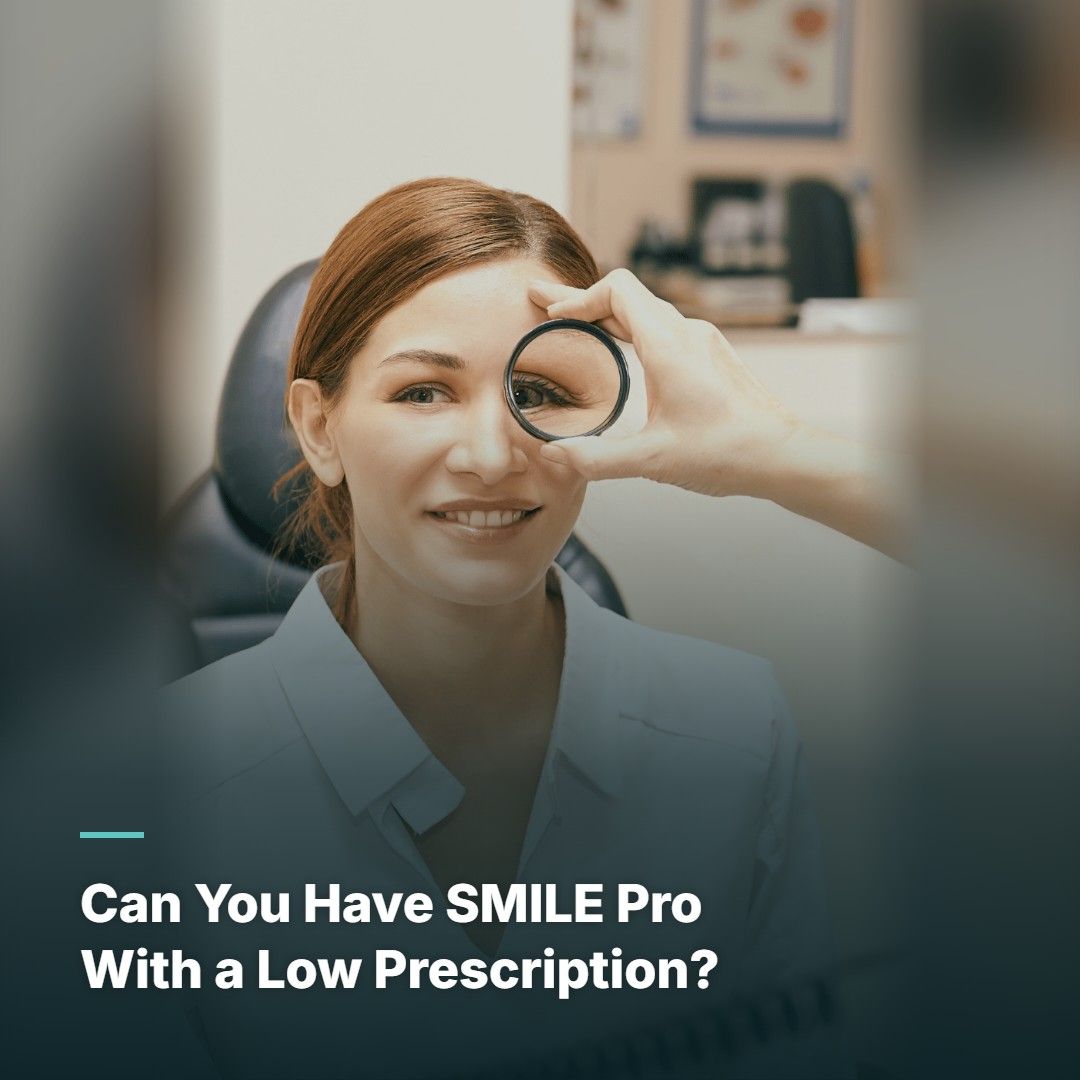
If you only need glasses for driving, the cinema or meetings, you may wonder whether laser surgery makes sense at all. SMILE Pro can treat low prescriptions, but a few technical and personal factors are worth weighing before you decide that surgery is the right step for you.
At a glance
- Low myopia can be treated, though very thin lenticules are more delicate.
- Some surgeons prefer surface laser for very low corrections.
- Age and future reading vision matter.
01 What counts as a low prescription
There is no strict definition, but prescriptions of roughly -1.00 to -2.00 dioptres are often described as mild myopia. People in this range may manage many daily tasks comfortably without correction but find distance vision blurry for driving, sport, presentations or recognising faces across a room. Some wear glasses only occasionally, while others wear contact lenses all day for convenience. How you use correction now shapes how much surgery would change your life. Being honest about how often you actually wear correction helps the surgeon advise you.
02 The technical challenge of a thin lenticule
In SMILE, the correction comes from removing a lenticule. For low prescriptions, that lenticule is very thin, which can make it more delicate to separate and remove cleanly. Platforms add a minimum edge thickness to make handling easier, and experienced surgeons manage thin lenticules routinely. Still, it is a reasonable topic to raise, and the surgeon's comfort with low corrections is worth asking about. It is perfectly reasonable to ask how many low-prescription cases the surgeon treats.
03 Why some surgeons suggest surface laser
For very low corrections, some surgeons prefer PRK, LASEK or TransPRK, where the excimer laser removes only the small amount of tissue needed from the surface. The trade-off is a slower and less comfortable recovery, typically involving a bandage lens and several days of discomfort. Asking why a surgeon recommends one approach over another helps you understand their reasoning and the balance between precision and convenience. Your surgeon can explain how recovery would differ for your schedule.
04 Age and the reading advantage
Mild myopia has an often overlooked benefit. After about 40, as presbyopia develops, a slightly nearsighted eye can often still read without glasses. Fully correcting that myopia may mean needing reading glasses sooner than you otherwise would. If you are in your late 30s or older, this deserves a frank discussion, because the trade-off between clear distance vision and easy reading becomes personal. Bringing your reading habits into the discussion helps avoid surprises later.
05 Monovision as a middle ground
Some people approaching presbyopia choose to correct one eye fully for distance and leave the other slightly nearsighted for reading. This approach, called monovision, can reduce reliance on reading glasses for everyday tasks. A contact lens trial lets you experience it before deciding, since not everyone adapts comfortably to the difference between the eyes, particularly for night driving or sports. Some people love it, while others prefer both eyes set for distance.
06 Weighing the lifestyle benefit
With a low prescription, the decision is more about lifestyle than necessity. Frequent contact lens wear with irritation, outdoor sports, swimming or work where glasses are impractical can make surgery attractive. If you only reach for glasses occasionally and they rarely bother you, the benefit may be smaller than the cost and the small risks of surgery. There is no wrong answer, only the right one for you. Thinking about the next ten years, not just next month, helps clarify the choice.
07 Screening is just as thorough
A mild prescription does not mean a lighter exam. You still need corneal thickness and shape testing, tear film assessment, a dilated retinal check and confirmation that your prescription is stable. The consent discussion about possible side effects, such as temporary dryness or night halos, is the same as for higher corrections. A careful clinic treats every case with the same standard. Ask to see your own results so you understand what was measured.
08 It is fine to wait
If you are unsure, waiting carries little downside for a low prescription. Glasses and contact lenses remain safe options, and your eyes will still be there to treat later if your needs change. A good clinic will respect your decision, answer your questions without pressure and encourage you to come back when you feel ready, rather than urging you to book on the spot. Your decision should always feel like your own.
The bottom line
A low prescription can be treated with SMILE Pro, but the case for surgery is about your lifestyle, age and preferences. A frank consultation should cover both technical options and whether treatment is worthwhile for you.
This article is for general information only and does not replace an examination or personal advice from a qualified ophthalmologist.