What Is Wavefront-Guided LASIK, and Who Might Be Offered It?
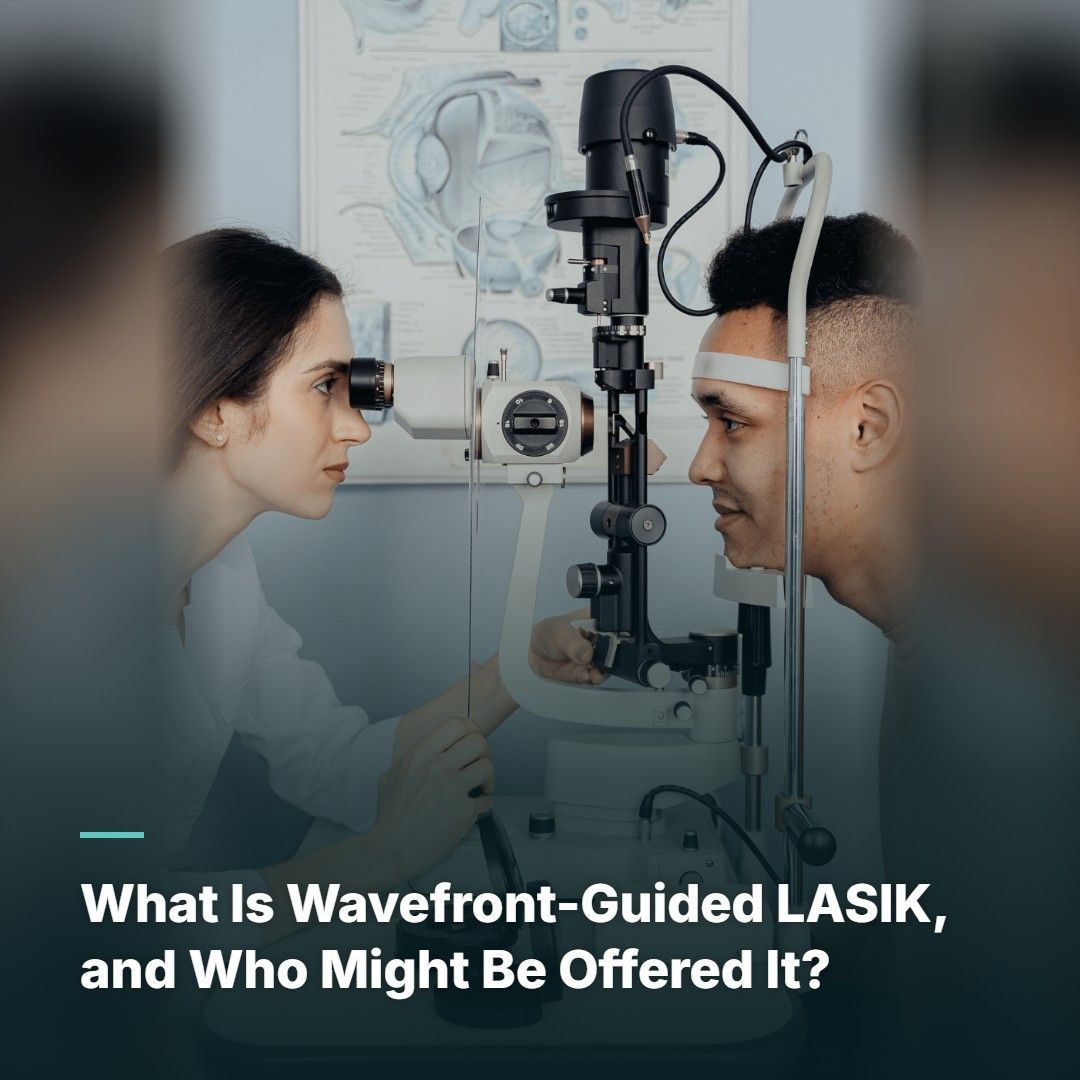
Standard LASIK corrects the prescription written on your glasses. Wavefront-guided LASIK goes a step further, using a detailed map of how light travels through your eye to tailor the treatment to your individual optical imperfections. It sounds appealing, but it is not the right choice for every eye, so it is worth understanding how it works.
At a glance
- An aberrometer maps how light is distorted in your eye.
- Treatment is customised to that personal map.
- Reliable, repeatable scans are essential.
01 Beyond sphere and cylinder
Glasses correct myopia, hyperopia and astigmatism, which are known as lower-order aberrations. The eye also has subtler distortions called higher-order aberrations, with names such as coma and spherical aberration. They can contribute to glare, halos, ghosting and reduced contrast, particularly at night when the pupil is large. Glasses and standard contact lenses cannot correct them. Most people have small amounts that cause no trouble, but some eyes have enough to affect the quality of vision noticeably. Your surgeon can tell you whether your own measurements show anything unusual worth addressing.
02 How the wavefront is measured
An aberrometer sends a safe beam of light into the eye and analyses the light reflected back out. The result is a detailed map of how the entire optical system bends light, including the cornea and the natural lens inside the eye. Several scans are usually taken, often with the pupil naturally large in dim light, to confirm that the measurements are consistent. Poor-quality or inconsistent scans cannot be used to guide a customised treatment safely. Your clinic may ask you to stop contact lenses longer to get the cleanest possible scans.
03 Turning the map into a treatment
For a wavefront-guided treatment, the measured map is used to design a customised excimer laser profile for each eye. The aim is to correct the prescription while also addressing measured higher-order aberrations. Iris registration links the map to features of your iris, so the treatment lines up correctly even if the eye rotates when you lie down. The excimer laser then applies this personal profile beneath the LASIK flap. The planning software checks that the profile stays within safe limits for your corneal thickness.
04 How it differs from wavefront-optimised LASIK
Wavefront-optimised treatments do not use your individual map. Instead, they apply a profile designed to avoid creating new spherical aberration, preserving the cornea's natural shape more closely than older conventional treatments. For many eyes with few higher-order aberrations, results with the two approaches are similar. Wavefront-guided treatment tends to be preferred when significant aberrations are measured and the scans are reliable. Both approaches are well established, so the choice should follow your measurements rather than marketing.
05 Who might be offered it
Candidates may include people with measurable higher-order aberrations, those with night vision complaints that can be linked to their optics, some patients with larger pupils and selected enhancement cases after earlier surgery. The decision always rests on the quality and repeatability of the measurements. A surgeon may also consider your prescription, corneal thickness and lifestyle, especially if you drive frequently at night. Telling your surgeon exactly what bothers you about your current vision helps guide this decision.
06 When it may not help
If your eyes have few higher-order aberrations, customisation may add little benefit while potentially increasing cost. If scans are inconsistent, perhaps because of dry eye, small pupils or difficulty fixating, the data may not be reliable enough to guide treatment. In those situations, a standard wavefront-optimised profile can be the safer and equally effective choice. Treating dry eye first and repeating scans can sometimes make customisation possible later.
07 Practical considerations
Wavefront-guided treatments require specific excimer platforms and additional testing, which can affect cost and scheduling. Not every clinic offers them, and some use them only for selected cases. Ask whether your clinic offers this option, how often the surgeon uses it and how your aberration measurements compare with typical eyes. Clear answers help you judge whether the extra step is worthwhile. It is reasonable to ask for the price difference in writing before deciding.
08 Setting realistic expectations
Customisation is a tool for refining treatment, not a guarantee of better than 20/20 vision. Healing responses vary from person to person, and the eye's optics continue to change with age. Careful screening, accurate measurements and appropriate candidacy remain the foundations of a good result. Treat wavefront guidance as one helpful option among several rather than as a must-have upgrade. A good result comes from the whole process, from screening to aftercare, not from one feature.
The bottom line
Wavefront-guided LASIK customises treatment using a map of your eye's optics. It can help some patients with measurable aberrations, but it is one option among several and should be recommended based on your data.
This article is for general information only and does not replace an examination or personal advice from a qualified ophthalmologist.