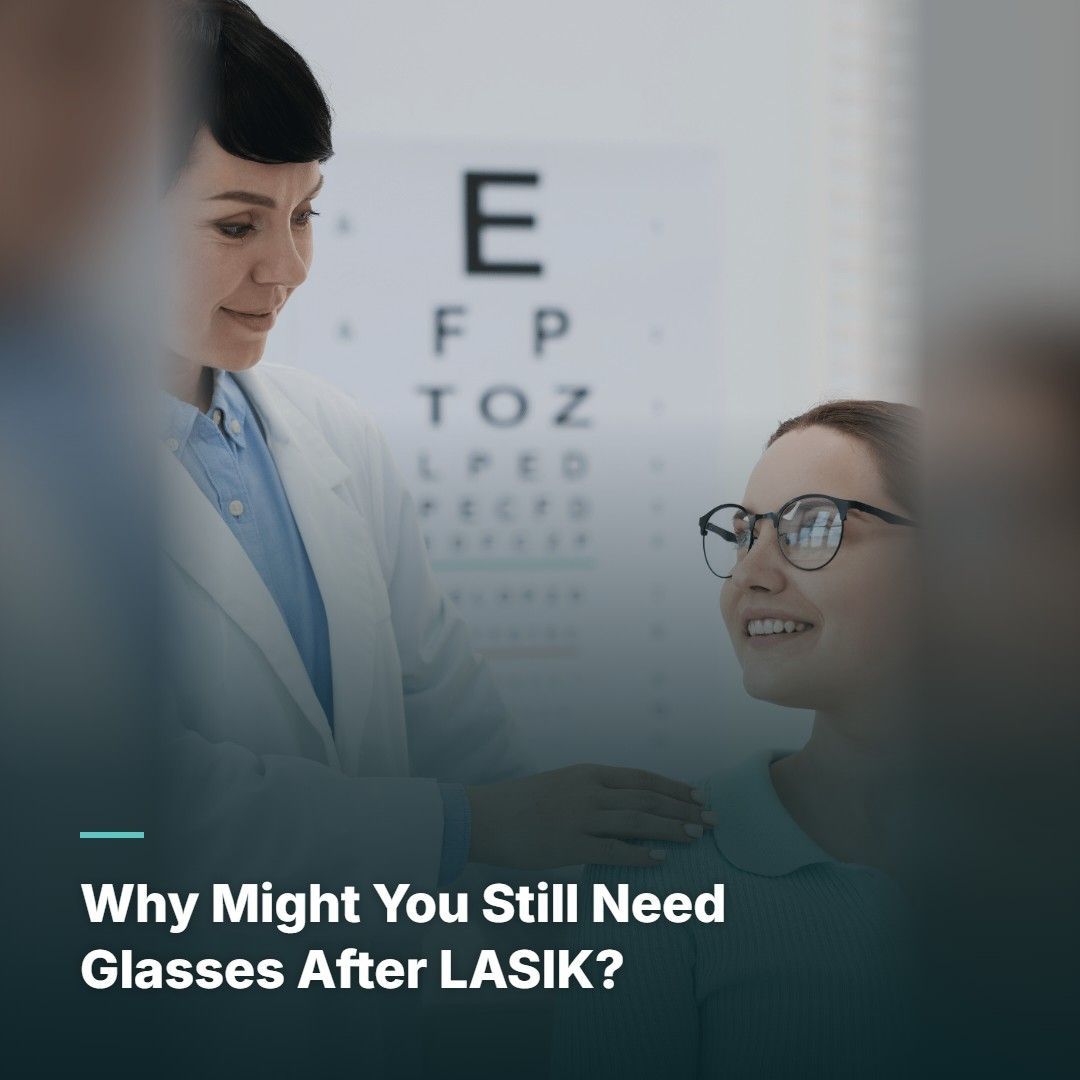
Why Might You Still Need Glasses After LASIK?
LASIK reduces dependence on glasses for most people, but it does not guarantee you will never wear them again. Understanding why helps set realistic expectations before surgery. Knowing these reasons in advance helps you set expectations that surgery can genuinely meet.
At a glance
- Presbyopia is not prevented by LASIK.
- A small residual prescription can remain.
- Eyes continue to change with age.
01 Presbyopia arrives regardless
From the early to mid-40s, the natural lens becomes less flexible and close focus gets harder. LASIK reshapes the cornea and does not change this process, so most people eventually need reading glasses. Typical early signs include holding your phone further away, needing brighter light to read and finding small print on labels harder to manage. This change happens to everyone eventually, whether or not they have had vision correction surgery. Reading glasses are a simple, inexpensive solution for most people when this happens.
02 Residual refractive error
Healing responses vary, and some eyes end up slightly under- or over-corrected. A small residual prescription may cause mild blur in demanding situations, even if everyday vision is good. The size of any residual error, and whether it bothers you, determines what happens next. Some people simply use a light pair of glasses for specific tasks, while others consider an enhancement once their eyes have fully stabilised. Keep a note of situations where you notice blur so you can describe them clearly.
03 Night driving
Glare, halos and reduced contrast are more common early after surgery and usually improve. Some people still prefer a light prescription for night driving if a small residual error becomes noticeable when pupils dilate. Dim conditions widen the pupil, which can make small residual errors and early halos more noticeable. Lubricating drops before night drives and keeping windscreens clean can help, and most early night symptoms improve over the first months. If night symptoms persist, mention them at your follow-up visits.
04 Long screen sessions
Dryness after LASIK can make vision fluctuate during long computer work. Some people find a mild prescription or blue-light-free computer glasses more comfortable while the eyes recover. Long periods at a screen reduce blinking and dry the eyes, which can make vision fluctuate. Regular breaks, lubricating drops and good screen positioning often solve the problem without any need for glasses as the eyes recover. Taking care of the tear film is often the quickest way to sharper screen vision.
05 Changes over the years
Myopia can occasionally progress again, especially if surgery was done at a younger age. Later in life, cataract formation changes the prescription. These changes are part of how eyes age rather than failures of LASIK. Regular eye exams after surgery help detect these changes early. Knowing that they can happen, and that they are part of normal ageing, makes it easier to accept a pair of glasses later rather than feeling that the surgery has failed. Regular eye exams also check for other age-related conditions.
06 Monovision as an option
If you are near 40, you can discuss monovision, setting one eye slightly for near. It can delay the need for reading glasses, though not everyone adapts comfortably. A contact lens trial is the best way to find out whether monovision suits you. Many people enjoy reading without glasses this way, while others prefer both eyes set for distance and use readers when needed. Discuss your hobbies and work so the target fits your daily life.
07 Enhancement versus glasses
A residual prescription can sometimes be treated with an enhancement. Others prefer occasional glasses rather than another procedure. Both are reasonable choices depending on your needs. An enhancement depends on stability and enough remaining corneal tissue. Many people decide that a pair of glasses for occasional use is simpler, especially if the residual error is small and only noticeable in certain situations. There is no wrong choice, only what feels most practical for you.
08 Setting the right goal
A realistic goal is reduced dependence on glasses for most daily activities rather than never wearing them again. Sharing your work, hobbies and driving needs helps the surgeon plan for how you actually use your eyes. Being specific about what matters most to you, whether it is sport, night driving, reading or screen work, allows the surgeon to choose the best target and explain realistic outcomes honestly. Honest planning leads to results that feel right in everyday life.
The bottom line
LASIK can greatly reduce your need for glasses, but presbyopia, residual prescription and natural changes may still call for them at times. Realistic expectations make the result far more satisfying. Clear expectations are one of the strongest predictors of satisfaction after surgery.
This article is for general information only and does not replace an examination or personal advice from a qualified ophthalmologist.