SMILE Pro Surgery in Gangnam: What Happens Before, During, and After the Laser
SMILE Pro is a keyhole form of laser vision correction. Instead of lifting a corneal flap, the surgeon removes a thin, laser-shaped disc of tissue through a small incision. Knowing what happens at each stage, from the first scan to the last check-up, makes the whole process far less daunting.
01 The screening exam comes first
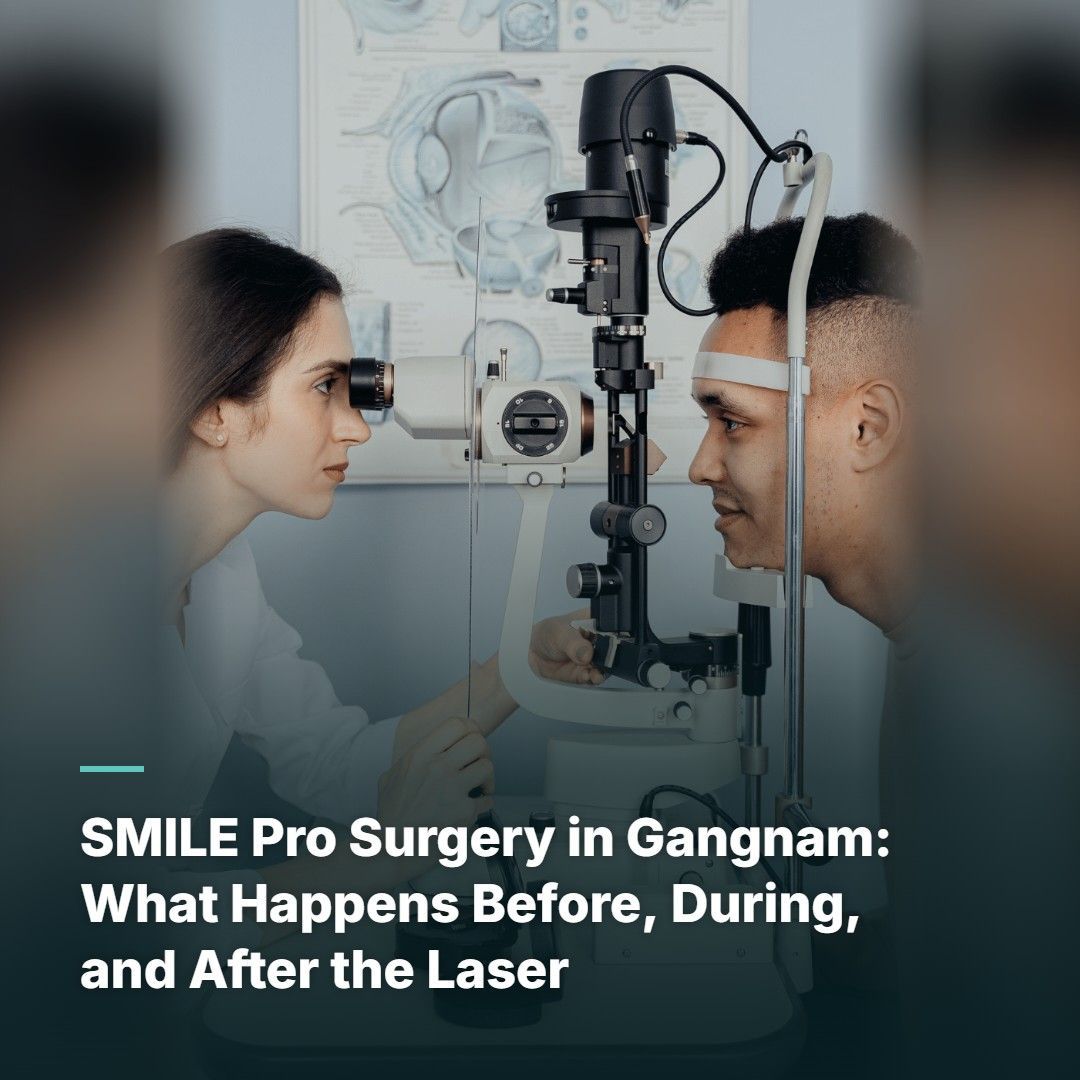
The most important part of SMILE Pro happens before the laser is switched on. A comprehensive exam measures your prescription, corneal thickness, corneal shape, pupil size, tear film and retinal health. These numbers show whether the cornea can safely give up the tissue needed for your correction. They also show whether another option, such as surface laser or an implantable lens, would suit your eyes better. Expect the visit to take a few hours, and ask to see and understand your own results.
02 Preparing your eyes beforehand
Contact lenses gently change the shape of the cornea, so you will be asked to stop wearing them for a set period before testing and again before surgery. Soft lenses usually need a shorter break than rigid or ortho-k lenses. If the exam finds dry eye, the clinic may treat it for a few weeks first, because a stable tear film makes measurements more accurate and recovery more comfortable. Bring old glasses or prescriptions so the surgeon can confirm your eyes have been stable.
03 Arriving on surgery day
On the day, key measurements are often repeated and you meet the surgeon again to confirm the plan and sign consent. Come without eye makeup, perfume or face cream, wear comfortable clothes and arrange for someone to take you home. Although the procedure itself is short, most people spend a few hours at the clinic between check-in, final tests, preparation and a brief rest afterwards. Eat a light meal beforehand and bring sunglasses for the journey home.
04 Getting ready in the operating room
Numbing drops are applied, the skin around the eye is cleaned and a sterile drape covers the surrounding area. A small speculum holds the eyelids open so you do not need to worry about blinking. You stay awake throughout, lying comfortably on a reclining bed, and the surgeon talks you through each step. Many clinics offer a mild relaxant if you feel anxious. Telling the team how you feel helps them guide you calmly through the next few minutes.
05 What the VisuMax 800 laser does
You look at a fixation light while a curved contact glass gently holds the eye steady with light suction. You may feel pressure and see the light blur or fade, which is expected. The femtosecond laser then outlines a thin lens-shaped piece of tissue, called the lenticule, inside the cornea, along with a small access incision. On the VisuMax 800 this laser step is designed to be very fast, so the time your eye must stay docked is short.
06 Removing the lenticule
Once suction releases, the surgeon works under the microscope. Using fine instruments through the small incision, the lenticule is gently separated from the surrounding tissue and removed. Taking out this precisely shaped piece changes the curvature of the cornea, which corrects nearsightedness and, where planned, astigmatism. You may notice shadows or light pressure but not sharp pain. Both eyes together usually take around 10 to 15 minutes in the operating room.
07 The first hours and days
Vision is usually hazy at first, and as the numbing wears off your eyes may feel gritty, watery or sensitive to light. Going home to rest with your eyes closed for the remainder of the day helps a great deal. Many people notice a clear improvement by the next morning, though some fluctuation over the first weeks is normal while the cornea settles. Avoid screens on the first evening, wear any shields provided at night and do not rub your eyes.
08 Follow-up visits and long-term care
Check-ups, commonly the next day, after about a week and again after a month or more, confirm that healing is on track and vision is stabilising. Use antibiotic, anti-inflammatory and lubricating drops exactly as prescribed. Ask before returning to swimming, dusty environments or contact sports. Increasing pain, redness, discharge or a sudden drop in vision are not part of normal recovery and should always be reported to the clinic promptly, even outside office hours.
The bottom line
SMILE Pro is quick on the day, but a safe result depends on careful screening beforehand and consistent aftercare. Use the consultation to understand your measurements, your alternatives and your follow-up plan before you commit.
This article is for general information only and does not replace an examination or personal advice from a qualified ophthalmologist.